15 Common TOEIC Vocabulary Mistakes (And How to Avoid Them)
Even advanced learners make these errors. Learn the most common vocabulary mistakes on TOEIC tests—confusing similar words, false friends, and tricky collocations. Avoid these pitfalls to boost your score.
Jan 13, 2026
Why Vocabulary Mistakes Happen
The TOEIC test is designed to catch common errors. Understanding these patterns helps you avoid traps and choose correct answers confidently.
Confusing Similar Words
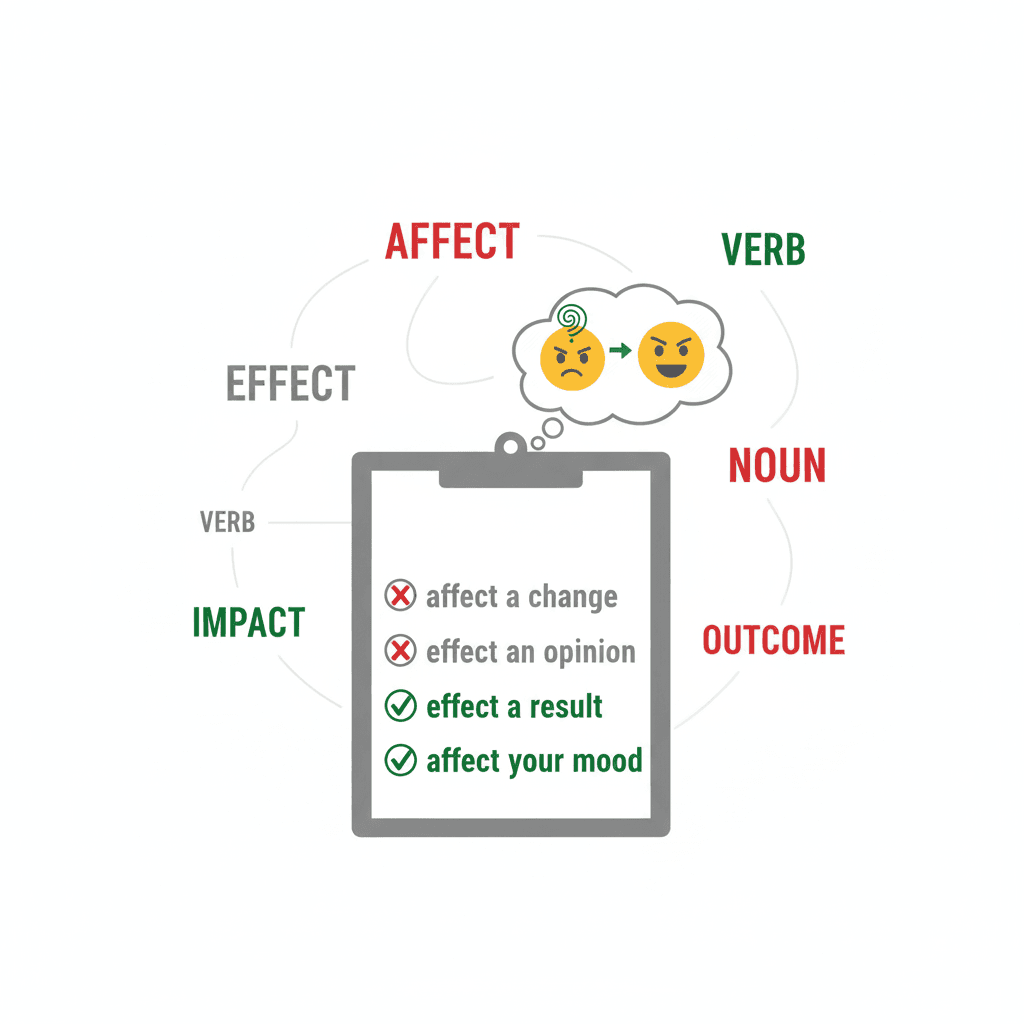
1. Affect vs. Effect
Affect (verb): to influence Effect (noun): a result
❌ "The new policy will effect employee productivity." ✅ "The new policy will affect employee productivity."
TOEIC Tip: In 95% of cases, "affect" is a verb and "effect" is a noun.
2. Assure vs. Ensure vs. Insure
Assure: to tell someone something with confidence (assure a person) Ensure: to make certain something happens (ensure a result) Insure: to provide financial protection (insure property)
❌ "Please assure that all documents are submitted." ✅ "Please ensure that all documents are submitted."
3. Compliment vs. Complement
Compliment: praise or admiration Complement: something that completes or goes well with
❌ "The wine compliments the meal perfectly." ✅ "The wine complements the meal perfectly."
4. Principal vs. Principle
Principal: main/chief (adjective) or head of school (noun) Principle: a fundamental rule or belief
❌ "Cost reduction is our principle objective." ✅ "Cost reduction is our principal objective."
5. Stationary vs. Stationery
Stationary: not moving Stationery: paper and office supplies
❌ "Please order more stationary for the office." ✅ "Please order more stationery for the office."
False Friends for Non-Native Speakers
6. Actually vs. Currently
Actually: in fact, really (correcting a misconception) Currently: at the present time
❌ "I'm actually working on the report." (meaning: now) ✅ "I'm currently working on the report."
7. Eventually vs. Possibly
Eventually: finally, after a long time Possibly: maybe, perhaps (NOT "eventually" in many languages)
❌ "The shipment will eventually arrive tomorrow." ✅ "The shipment will possibly arrive tomorrow."
8. Sensible vs. Sensitive
Sensible: practical, reasonable Sensitive: easily affected, delicate
❌ "This is sensitive approach to the problem." ✅ "This is a sensible approach to the problem."
Tricky Collocations
9. Make vs. Do
Make: create, produce, or cause
- make a decision, make progress, make a mistake, make an effort
Do: perform an action
- do business, do research, do work, do damage
❌ "We need to do a decision by Friday." ✅ "We need to make a decision by Friday."
10. Say vs. Tell
Say: say something (no person directly after) Tell: tell someone (person directly after)
❌ "She said me the meeting was postponed." ✅ "She told me the meeting was postponed."
11. Rise vs. Raise
Rise: go up (no object) - rise, rose, risen Raise: lift something up (needs object) - raise, raised, raised
❌ "The company will rise prices next quarter." ✅ "The company will raise prices next quarter."
12. Remember vs. Remind
Remember: recall from memory (you remember) Remind: cause someone to remember (you remind someone)
❌ "Please remember me to send the invoice." ✅ "Please remind me to send the invoice."
Preposition Errors
13. Depend on (not "of")
❌ "The outcome depends of market conditions." ✅ "The outcome depends on market conditions."
14. Interested in (not "for")
❌ "We are interested for your proposal." ✅ "We are interested in your proposal."
15. Responsible for (not "of")
❌ "She is responsible of the marketing department." ✅ "She is responsible for the marketing department."
Quick Reference Table
| Incorrect | Correct | Context |
|---|---|---|
| effect (v.) | affect | The change will _____ sales |
| assure results | ensure results | Make certain outcomes happen |
| principle goal | principal goal | Main objective |
| actually (= now) | currently | At the present time |
| do a decision | make a decision | Choose an option |
| said me | told me | Communicate to someone |
| depends of | depends on | Relying on something |
| responsible of | responsible for | In charge of |
Pattern Recognition for TOEIC
The test often presents options with similar-looking words. Train yourself to:
- Read all options before choosing
- Identify the word type needed (noun, verb, adjective)
- Check collocations (what words naturally go together)
- Watch for prepositions after key words
- Consider context for meaning distinctions
Practice Strategy
Week 1-2: Awareness
- Read through this list daily
- Notice these words in your reading
- Mark them when you encounter them
Week 3-4: Active Practice
- Create sentences using each pair
- Test yourself on the differences
- Use flashcards for problem pairs
Week 5+: Application
- Take practice tests focusing on these areas
- Review any mistakes involving these words
- Build a personal list of your problem words
The 80/20 of TOEIC Vocabulary Mistakes
These 15 errors account for a disproportionate number of wrong answers. Master them, and you'll avoid common traps that catch many test-takers.
Remember: TOEIC rewards precision. Knowing the subtle differences between similar words separates good scores from great ones.
Ready to start learning?
Join thousands of learners improving their vocabulary every day.
Get Started Free